Friday, May 24, 2013

Celebrity Stalking


The celebrities are at it again. They keep
stalking me for poetry. Just the other day
George Clooney tried to deliver my pizza
so I could sign his broadside, Meryl Streep
crouched in my back yard with a chapbook,
Julia Roberts broke into my bathroom
to ask about meter, and Charlie Sheen left
twenty-six messages asking for [sic] sexstinas
written in the colloquial language of porn,
but these movie stars think they know the real me
behind the poetry because they read tabloids
in line at the super market that detail
the lurid private lives of poets who take lovers,
get caught without make-up, carry small dogs,
enjoy gay trysts, drink absinthe and own
many-chambered homes with deep-pile
cream carpets, secret rooms, and libraries
the size of Luxembourg. They couldn’t know
that I’m allergic to even numbers and no longer
fluent in filthy words. I’m feeling dogged
with anxiety on this spring nocturnal 
in the City of Angels, a hundred watt moon 
on the rise and the song birds playing music 
well past prime time like neighbors 
with no children. What we sacrifice 
for our art. We didn’t ask for this.  

Saturday, May 11, 2013

The Circumstances of Your Birth

Either you were pushed from your mother's womb with great effort or a doctor cut the red lining and lifted you into the glare of hospital lights. Either your mother fed you from her breast or fed you formula like the majority of us 70s babies. In the worst circumstances your mother was gone too early for you to have a memory of her.

Either you were born whole or something happened in utero when cell met cell or during birth, and you've been forced, by nature of your bearing, to rise above a physical or mental handicap. In the worst circumstances, genetics or delivery has rendered you so broken that people avert their eyes when your mother rolls you into the neurologist's office.

Either you were born into a family as an only child, or you had siblings for companions. Either you were happy with this scenario or not. In the worst circumstances, you had a sibling once, but something happened to him or her. You may or may not remember. Your family may or may not talk about what they lost. Photos may or may not be displayed. This feature sometimes hangs like a thread. Pull it, and the whole family falls apart.


Either you were born of good stock, your parents both bright and attractive, neither harboring hidden fuck-ups, or you were born of parents, one or the other (or sometimes both), who struggle with deep-seated dysfunctions that were handed down to them by their parents, and you wonder if you can make it all stop with you. In the best circumstances, nurture overcomes nature, whether its a self-provided nurture or one afforded by family. In the worst circumstances, the defective aspect of your nature has been compounded by a lack of effective nurturing, and you either have no idea that you're a mess, or you have no idea how to clean up the mess that is you, thanks to a lack of both breeding and upbringing.

Either you were born in the best hospital your town has to offer, your mother given a basket of diapers and formula samples, or you were born in a home with a midwife and doula present. In the most remarkable situations you were born in an emergency room when your mother didn't even know she was pregnant, in the back of a cab because your mother waited too long and your father was on duty, or on your mother's kitchen floor because she was single and didn't get help in time. In worse situations, you were born in the grass of an impoverished country where you were sent off to an orphanage to wait, hopefully, for first-world parents you may or may not ever connect with.

Either you were born into a family that pulls you to them, the physical second-nature, all mouth-kisses, bear-hugs, and spooning in your parents' big bed, your mother's breasts as commonplace a sight as the hummingbird feeder in the kitchen widow, or you were raised by a family that was afraid of the body and its affections, and you're still unsure which way to tilt your head when you awkwardly wrap your arms around your father on special occasions. In worst situations, you were never shown tenderness and you've grown up unable to connect in a meaningful way with another human being.

Either you were born into a world where the car seats are Britax and the preschools are competitive, or you were born into a world where your mother has three jobs or no job, your food is government-provided, and you're often shipped off to the house of a grandparent or aunt when your mother or father is deemed an insufficient parent by the state. Many assume you'll amount to nothing. In worst situations, you're born in a country where famine and disease are commonplace, and any opportunities for labor that your mother may have are offered by first-world countries looking to take advantage of the circumstances of her birth.

Or some combination; it's rarely either/or. How blessed are you?

Friday, May 3, 2013

Miscarriage

Sometimes something terrible can startle you with its beauty. Take, for example, the bright ruby cabochon of blood I saw on my toilet paper a few weeks into an unexpected—but desperately wanted—pregnancy. The sun from the bathroom window glimmered off the perfectly round jewel, which was the first to appear, and then they just poured out of me, unformed and unfaceted, until I was an empty bag again. 
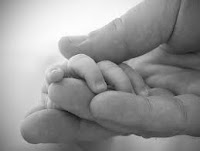
According to the week-by-week pregnancy newsletter I had optimistically signed up for, I was only in that fifth week, which is when this usually happens. The heartbeat comes a week or two later. Technically, I knew I was pregnant only for a short while, although my body knew prior to any plus symbol on a piece of plastic. I had a dream somewhere around conception that I was pregnant, and in it I could see the shape of a baby's hand through the skin of my belly. Sometime around implantation I was half awakened by a tingling in my breasts, which partially registered as dream. So I suspected. And just as I had a feeling I was pregnant before testing, I knew I wasn't pregnant anymore the minute I saw that first drop of blood. I checked in, and my body said, sorry, no. 

The hormone dump afterward complicated the grieving, or it made the grief for a gathering of cells that didn't even have a heartbeat yet more crushing, and I stopped functioning for a little while. My four-year-old said Mama, you're okay as he patted my head. The dogs crowded around my face to lick the salt off. My husband offered support and affection, but his response was more complicated since this was a pregnancy he didn't want.

A miscarriage happens thirty-three percent of the time in women over the age of forty. I guess I'm a statistic now. I'll be forty-three this June, and my husband doesn't want another child. I knew one was the magic number going in, so he's not a villain. I tried to renegotiate, and my accidental pregnancy ended in miscarriage. Therefore, it was the last chance I had for a second child. When we don't get what we want, we move on and hope no bitterness remains.
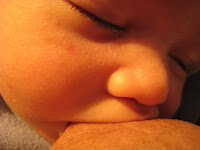
We have to admit though, if motherhood has resonated for any of us, we're talking a little bit about where addiction and instinct collide. For example, the painful sweetness as your baby first latches on, and you feel that cramp in your gut as his small mouth pulls your body back together. I remember how I wept as I folded the beanie and shirt my newborn son came home in, how they could fit in a Zip-loc. Knowing I will never again experience such complex joy feels like a personal tragedy.
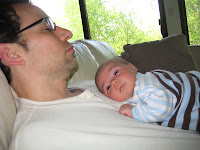
And to be fair, it is personal. Directly after the miscarriage, I was a terrible person. I didn't think I could love my friends who were fortunate enough to have as many children as they wanted. I wanted to snatch babies away from teenagers I saw on the bus. I dreamed up ways to become pregnant anyway. But then when I became my true self again, once my body settled, I remembered how fortunate I am. I have a husband who is good with his son and good to me. I have a beautiful boy who is healthy and whole. I was able to become a mother and many women aren't. Many women lose their babies to accidents, violence, or disease.

In the end, really, I am one of the lucky ones.  

Sunday, April 28, 2013

Music Studies: Part 1


Cinderella, The Disney Soundtrack: LP[1]

Bobby Vinton’s All-Time Greatest Hits: 8-track[2]

Shaun Cassidy: Da Do Ron Ron & Hey Deanie: 45[3]

Saturday Night Fever soundtrack and Grease soundtrack: LP[4]

Donna Summer: Bad Girls[5]

Cyndi Lauper: She’s So Unusual; Men at Work: Business as Usual; John Cougar: American Fool[6]

My Wham! and Duran Duran stage[7]

My early metal stage: Early to mid eighties[8]

My middle metal stage: Mid eighties[9]

My late metal stage: Late eighties to early nineties[10]

The grunge stage: Early nineties[11]


[1] My very first memory of an LP spinning on a turn-table. The only sound I remember is the mice singing.
[2] Also the first concert I ever attended. I think I may have been wearing a blue velvet dress, which was apropos. I was taken up on stage to meet him.  I must have been around six years old. I wore out this 8-track in my grandfather’s powder blue Cadillac, circa 1975(ish).
[3] My first crush. Why him?
[4] Also the first movies I remember seeing as a child.
[5] Disco Fever? I guess I had it. Anyway, what did I know about prostitution and lust? It had a good beat and you could dance to it.
[6] Purchased with a penny, plus shipping and handling, from Columbia House Records along with seven other selections, which I don’t remember.
[7] I categorize this as my dawning of sexuality wherein my musical tastes were greatly influenced by the comeliness of the musicians. I remember hearing Wild Boys on the stereo in my mom’s bedroom and thinking the song was edgy. I watched MTV for hours just waiting for the Careless Whisper video because George Michael made me feel funny inside.
[8] It was really just a more rebellious form of discovered sexuality. In particular, I recall Mötley Crüe’s Shout at the Devil as figuring prominently in my regular playlist. My first concert attended without grown-ups was a Ratt/Poison show. Some creepy guy grabbed my butt; I tried to bend back his fingers. My musical tastes at this time also seemed to be influenced by the attractiveness of the musicians. Apparently, I liked men who wore make-up.
[9] Ozzy Osborne’s Bark at the Moon, Diary of a Madman; Judas Priest: Defenders of the Faith; Anthrax: Among the Living; Dio: Holy Diver; any and all Led Zeppelin, especially 1, 2 and 4; Metallica: Ride the Lightning; Master of Puppets; Helloween: Keeper of the Seven Keys, Part I; Some Exodus and Testament; Some Rush; Guns n’ Roses: Appetite for Destruction; Van Halen; Skid Row: Scorpions…etc. etc…I can’t take much of this seriously anymore; however, AC/DC, Led Zeppelin, and Van Halen still rock. On the other hand, nostalgia makes some of this music bittersweet. Oh, and Metallica is still great to work out to.
[10] Queensryche: Operation Mindcrime; Mr. Big: Lean Into It: Badlands: Badlands: My phasing out of metal was gentle since I still loved rock and roll. On the other hand, Edie Brickell emerged on the scene and I discovered something with a little more hippie soul. Then grunge took over. And Nine Inch Nails. New, different anger.
[11] Driving to Community College listening to Alice in Chains; Driving on the Taconic listening to Nine Inch Nails; Going to concerts at club I can’t remember where they played Evenflow by Pearl Jam so rocker girls could dance, Nirvana sounding like the future of music: that video for Smells Like Teen Spirit forever burned into my brain.   

Thursday, March 21, 2013

Easter and Christmas for Possibilians


Neuroscientist David Eagleman says this about religion: "Our ignorance of the cosmos is too vast to commit to atheism, and yet we know too much to commit to a particular religion. A third position, agnosticism, is often an uninteresting stance in which a person simply questions whether his traditional religious story (say, a man with a beard on a cloud) is true or not true. But with Possibilianism I'm hoping to define a new position — one that emphasizes the exploration of new, unconsidered possibilities. Possibilianism is comfortable holding multiple ideas in mind; it is not interested in committing to any particular story." 

This stance I find particularly appealing, so I consider myself a Possibilian, which, in my mind, is a very generous way to approach religion. However, I was raised Catholic. As a result, Christmas and Easter are emotionally complicated.


Wrapped up in all the brightly colored memories of baskets packed with hollow chocolate bunnies, Peeps, and stuffed animals is the story of how Jesus saved my soul through personal sacrifice. Wrapped up in all the flavors of jelly beans, Cadbury Creme Eggs, and those pastel -colored candy eggs with marshmallow inside are sweet memories of taking palms to the cemetery, going to mass in a yellow dress and bonnet, and sitting down for a meal that was not about candy but was about family and religion. All the beliefs that bolstered the holiday and gave it weight. 


The same was true for Christmas: All the "magic" of Santa Claus and a boatload of presents paled in comparison to the carols sung in Jesus's name, to the story of his birth (Do you remember that scene in the Charlie Brown Christmas special?), and to the nativity scenes shimmering in the snow and white Christmas lights outside the various churches. 

It's all past-tense now, and lives in my memory as bittersweet nostalgia for when I could believe without question. This would be fine to live with during the holidays when I want to recapture something special, but all I'm left with is the difficult decision of whether to chose traditional jelly beans or something more dynamic in flavor. The problem is that now I have a child, and my husband and I have to decide how to approach religion. 


Some parents choose to hand down religion. This is how I came to be raised Catholic. Yet I'm not going to foist a religion on Dexter, especially since I'm skeptical of organized doctrines and frightened by dogma. On the other hand, what is wrong with some kind of gentle introduction to a system of beliefs that he can chose to adopt or dismiss when he gets old enough to make those decisions?

Dexter goes to an Episcopalian preschool, and his Easter party is next week. I have volunteered to bring fruit to the party, and I'm hoping Dexter eats more fruit than candy. I know that St. Mark's offers the children a very simple introduction to the story of Jesus. Dexter is being introduced to Christianity, and it doesn't really trouble me, even if I largely don't buy into it anymore. I at least like the inclusiveness of the Episcopal church. And frankly, I would rather my son had some foundation for the holidays: something that lends them gravitas. It was why they mattered when I was a child. 


Does this mean that he might become a church member? I don't know. He might reject it all when too many questions remain unanswered by religion. I suppose that's the deal with faith, which is a hard pill to swallow. He's also welcome to choose religion; I just hope he chooses one that reflects the kind of values we care about in our home, which tend to be humanist and progressive. Can a religion uphold such secular values while still preaching Christian ideals? I suppose anything is possible. 


Tuesday, March 19, 2013

The Other Polarizing Disorder


Sometimes, late at night, well into my second glass of wine, my husband at work and my son sleeping, I mourn the loss of other people’s children. It’s usually during that hour when I’m immobilized by weariness yet unwilling to drag off to the bathroom to brush and wash, so I sit in front of the computer, study the photos of little boys, and have an unhealthy cry for Ronan, the one who died of tay-sachs; for the Staten Island mom whose sons were yanked from her arms by Hurricane Sandy; and for another mother whose entire family was washed away by the Southeast-Asian tsunami. My grief is discriminate; I mirror the bereavement of mothers who had and then who did not have anymore. I pluck stories from around the world about the entire annihilation of motherhood.

Let me tell you something about the way parenthood can change you: It is like an anti-anti-depressant or like a polarizing disorder that doesn’t just swing to and fro but that swings wildly. This is not to say that the opposite of anti-depressed is depressed or that it’s all bad; I’m talking about the loss of casual numbness about anything. Joy, for example, is amplified into something wildly exuberant. Love for a child can make you as giddy as a teenager, with all the angst-y hysteria, plus some added depth. On the other hand, anger is a coiled whip that now sits closer to your hands, and sadness can grab your lungs and squeeze them until your heaving tears in front of your computer at midnight for people you have never met. This sickness of parenthood may just be mine. I don’t know…

Fear, too. And compassion. They become more palpable. At Disney’s California Adventure there is a Ferris wheel that features gondolas on tracks that roll and swing out wildly hundreds of feet in the air above the park. Yesterday my niece and I rode up and around, and what looked like fun on the ground became nauseous, instinctual discomfort. Far below I could see my son asleep in his stroller, his grandmother waiting for us on the bench. Across from us in the gondola a girl visiting from Arizona clutched her father’s jacket in abject terror, the tears gathering but not yet falling. All I could do was talk to her in a low murmur: “It’s okay honey. I know it’s scary. We’ll be on the ground soon. Don’t worry.” And so on. I couldn’t stand to see her like that. I didn’t even know her.

I think this is probably more personal that I can fully grasp. Last summer my son suffered a series of partial seizures, and for a week we knew from his MRI read that something was wrong with him, but we didn’t know whether it was a disorder that would work itself out over time or whether he was showing the beginning signs of a “demyelinating process” that would piece-by-piece disassemble the puzzle of what makes him him. We wouldn’t know until we saw the neurologist. In fact, we’re still not completely positive. I have seen two full-blown febrile seizures that turned a very busy three-year-old into a vegetable for a half-hour. The things I have seen. I’m all too aware of the possibility of losing the one, small person that marks me as someone’s mother, not just from my own experiences with my only child, but also vicariously from others less fortunate, which sounds too mild to describe the catastrophic ending of motherhood.

At amusement parks there is always that game where you’re supposed to climb across a ladder made of rope to win a prize. The rope is anchored in the middle on either end so that the climber must rely on speed and balance to make it across, or the ladder will spin on its one tether and knock the climber off. This is what it feels like to be the parent of an only child. I imagine that two children would be like two tethers at either end, and I could climb across with more confidence, but since I wanted two and only have one, sometimes I feel like I’m spinning around on this rope ladder, and my grip is really compromised. I’m really worried I’m going to slip. I don’t trust my ability to balance.

Wednesday, February 20, 2013

Dragging My Heels

I dragged my heels around Silverlake Reservoir a little while ago before Michael left for work. The sun was hot but the air was cold, and the San Gabriel Mountains were dusted with snow. The music plugged into my ears and the sunglasses over my eyes just made me feel even more apart from all the other people circling the water. There was a cramping sort of ache in the left side of my chest. I mean literally. Not like I'm making purple prose about sadness. I wondered if I have something wrong with my heart because I've been jittery about mortality lately.

Back home, my son continues to lay around, too sick to get up. My husband has now left for work, and the apartment is flooded with light, but we can't leave to enjoy the cold breeze rustling the leaves of the Eucalyptus. Or we can enjoy the view through the windows. I'll spend the day and night inside chasing my son's fever so he doesn't seize again. Go figure about the jittery part. Meanwhile, we watch Pixar movies from the couch because they make us feel good.

And lately I've been bombarded with bad news about other people's children. I read blogs about sick or hurt children, wanting desperately to believe in impossible miracles for strangers only to learn that the children die. I read articles about Hurricane Sandy on Staten Island, and they remind me about the boys swept from their mother's arms. It seems like I can't escape the reminders of our mortality and how it sometimes, stupidly, just comes down to luck. And today, despite my son's sickness, I think I might be lucky.

But, I don't know. After seven months of trying to conceive a second child, my husband has decided that we're too old and it's too scary and why would we want to push our luck, why would we want to rock the boat. However, I'm not convinced by his argument, logical as it is. It's true, though. At 42 and 46, we're really too old. My body doesn't seem to be cooperating to let this happen as naturally and quickly as it did with my son. But I've become just a hopeless, emotional mess of biological yearning.


So on the one hand I feel lucky to have one beautiful son. I know this. Really, really lucky and grateful.  On the other hand, it looks like I'll only get to have the one. All my eggs in one basket. And it doesn't seem fair that we've really tried to do things in a responsible way, and as a result of that, our age, and all the wisdom that comes with it, is now preventing us from making any more children. I should say that we looked (are looking?) into adoption, but the process, at first glance, seems insurmountable and filled with risk.

Anyway...I'm going to go back to watching Toy Story now. The bright colors are very cheerful...